
It’s Turtle Hatching Season on the Great Barrier Reef
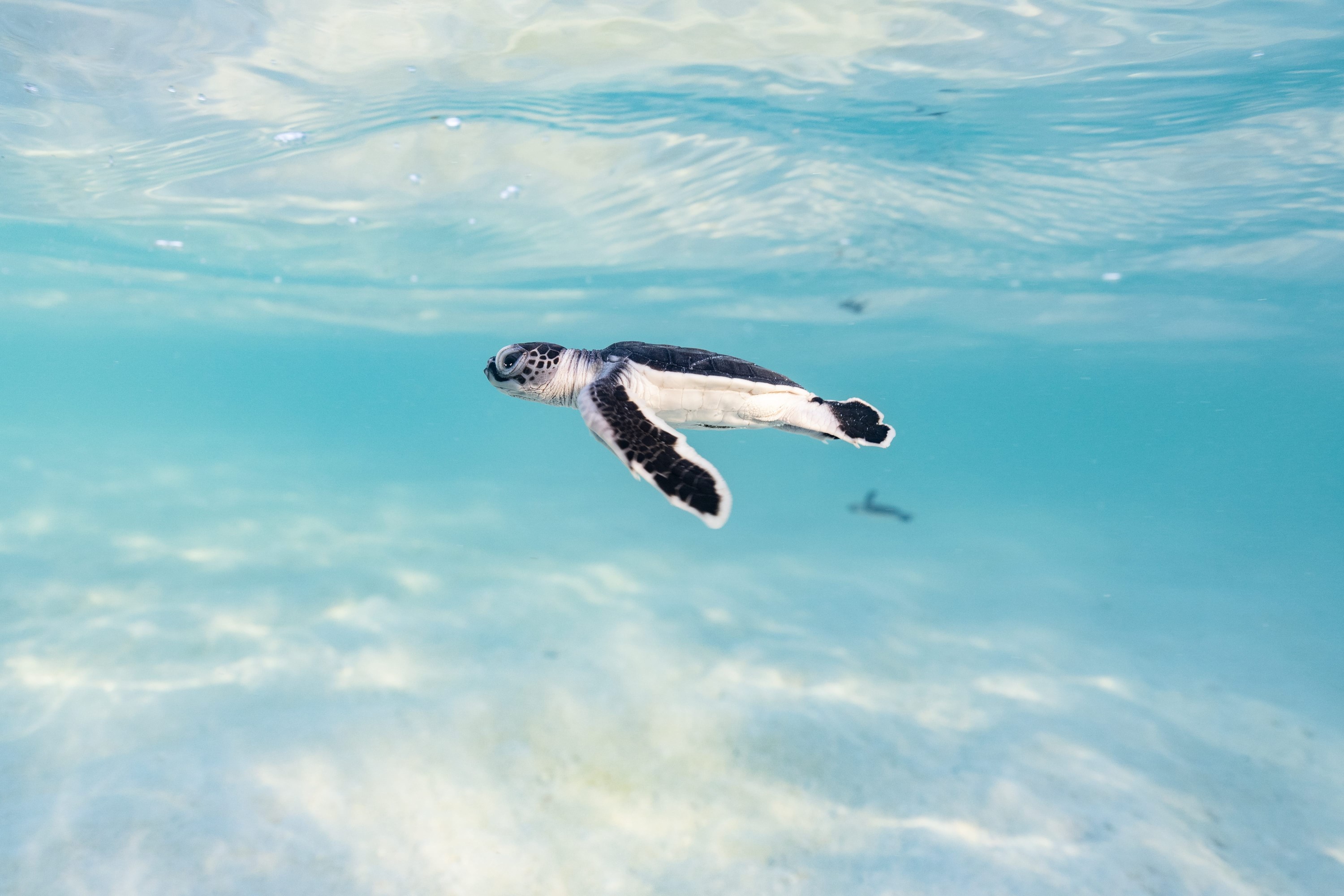
Turtle Hatching Season in the Whitsundays
Right now, here in the beautiful Great Barrier Reef Marine Park, an incredible natural spectacle is unfolding. Baby sea turtles are hatching on our beaches and making their way to the ocean to begin their lives at sea.
In the Whitsundays, we’re lucky enough to host 6 of the world’s 7 sea turtle species. The most seen in our waters are the Green, Hawksbill, and Loggerhead turtles.
Female turtles come ashore at night to lay their eggs on sandy beaches, both island and mainland, from as early as October through to March. From early January, hatchlings begin emerging from their nests, usually as a group, and make their dash across the sand toward the ocean.
Hatchlings emerge at night and instinctively follow the moonlight reflecting on the sea. This journey across the beach is crucial. It allows them to imprint on their birthplace, so one day they can return to lay nests of their own. Hatching continues through to March and early April, with February typically being the busiest month.
Fun Fact: The gender of a sea turtle is determined entirely by the temperature of the sand during incubation. Warmer sand produces females, while cooler sand produces males.
What happens once turtles reach the ocean?
This is where we enter the “lost years”. For anywhere between 2 and 10 years, young turtles disappear into the open ocean, learning how to feed, grow, and avoid predators. Eventually, they return to coastal waters to forage in safer habitats.
The lost years used to be a big mystery, but new research has allowed us to begin to learn a bit more about what these amazing animals get up to out there. How amazing!
Fun Fact: Adult female turtles will travel thousands of kilometres to return to the area where they hatched – just to lay their own nests.
Why protection matters
Sea turtles have a very low survival rate, with only about 1 in 1,000 hatchlings reaching adulthood. They play a key role in maintaining seagrass beds and coral reefs, which in turn supports ocean and reef biodiversity and human life.
Did you know seagrass meadows cover less than 0.1% of the sea floor, yet they store 11% of the ocean’s organic carbon? They’re a massive carbon sink! Maintaining them and helping them flourish, helps tackle climate change.
How you can help during nesting and hatching season:
• Avoid driving on nesting beaches
• Avoid camping and setting up structures on beaches
• Keep lights low at night so hatchlings can find the sea
• Keep a safe distance, stay quiet, and avoid flash photography
• Pick up rubbish and never litter
• Do not handle turtles or hatchlings
• Stay off sand dunes
If you see an injured turtle or a disturbed nest in the Whitsundays, please contact Eco Barge Clean Seas Inc. 0417 642 815.
Want a chance of seeing a sea turtle in their natural habitat?
Book one of our Viper or Lady Enid tours today!
There’s also a high chance of turtle sightings on our daily Sundowner sunset cruises. We cruise slowly around Pioneer Bay off Airlie Beach, and around Pigeon Island near Cannonvale Beach over the seagrass meadow which is a prime feeding ground for turtles.
Photos courtesy of Tourism & Events Queensland.